Tepezza® — Teprotumumab Infusion
For Active Thyroid Eye Disease
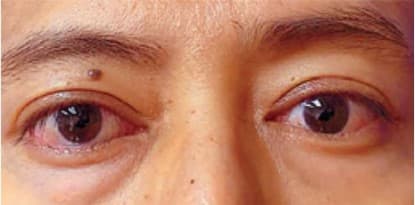
Tepezza (teprotumumab-trbw) is the first FDA-approved medical therapy specifically targeting the underlying pathology of Thyroid Eye Disease. In clinical trials, it produced a ≥2 mm reduction in proptosis (bulging eyes) in 83% of patients — without surgery — and significantly improved double vision, lid retraction, and quality of life.
What Is Tepezza?
Tepezza (generic name: teprotumumab) is a fully human monoclonal antibody approved by the FDA in January 2020 for the treatment of active Thyroid Eye Disease (TED), also called Graves' ophthalmopathy. It is administered as an intravenous (IV) infusion in an outpatient infusion center or physician's office.
Before Tepezza, the main options for significant proptosis were IV steroids — which provided mostly temporary relief — orbital radiation or other immunosuppressive therapies, and surgical orbital decompression. Tepezza targets the disease mechanism directly, producing reductions in proptosis and inflammation that often persist beyond the completion of the treatment course, though some patients experience partial relapse and may need retreatment.
ASOPRS fellowship-trained oculoplastic surgeons are uniquely qualified to manage Thyroid Eye Disease across its full natural history — from monitoring the active inflammatory phase and administering Tepezza, through surgical rehabilitation when the disease stabilizes.
How It Works
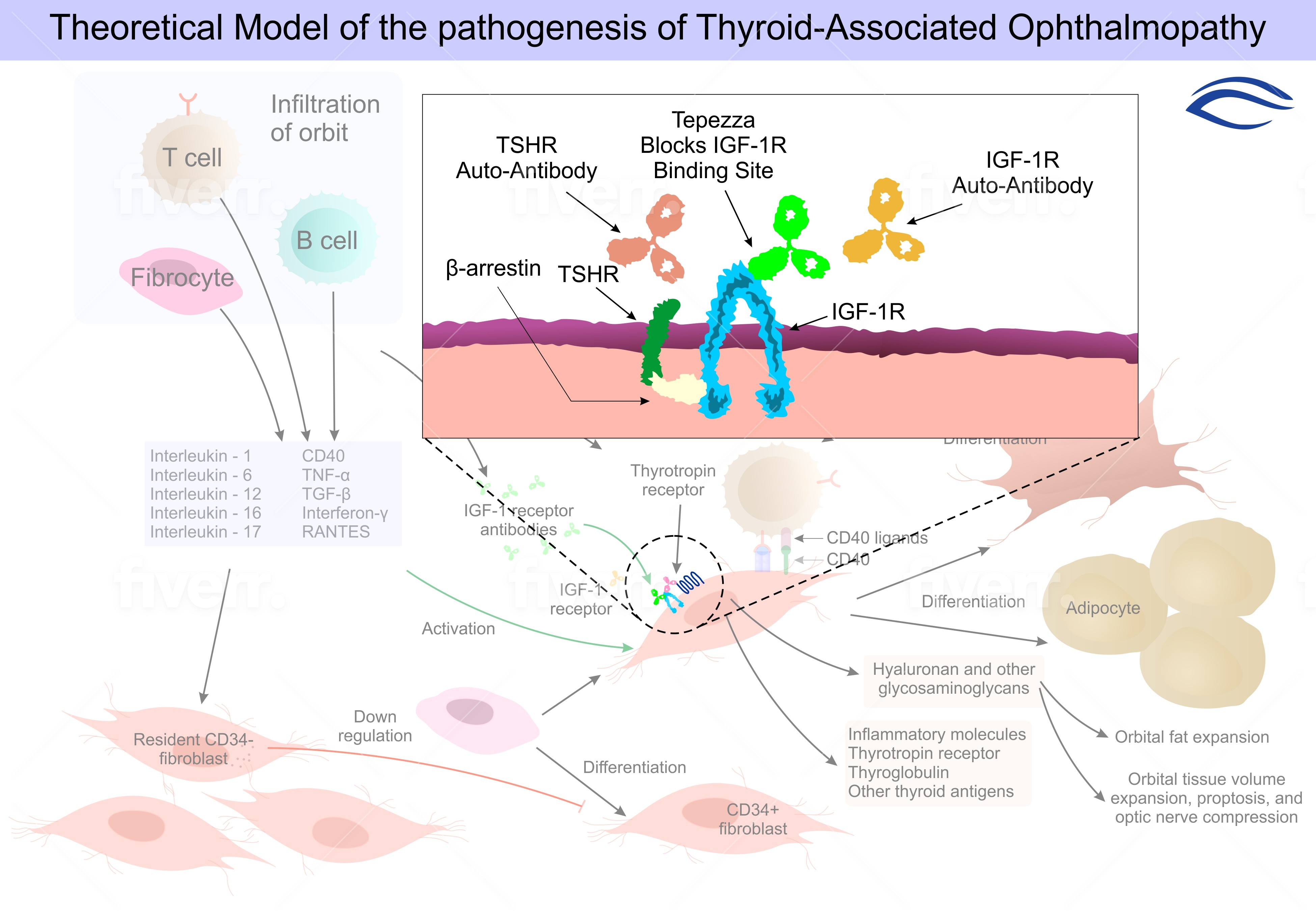
The hallmark of TED is activation of orbital fibroblasts — connective tissue cells within the orbit — by two key immune receptors: the thyroid-stimulating hormone receptor (TSHR) and the insulin-like growth factor-1 receptor (IGF-1R). When autoantibodies bind these receptors, fibroblasts proliferate, produce excess hyaluronic acid, and differentiate into fat cells, causing orbital volume to expand. The result is proptosis, lid retraction, double vision, and orbital pain.
Teprotumumab's Target: IGF-1R
Teprotumumab binds and blocks the IGF-1R receptor, interrupting the signal cascade that drives fibroblast activation. By silencing this pathway, the drug: